-

Doctors Products
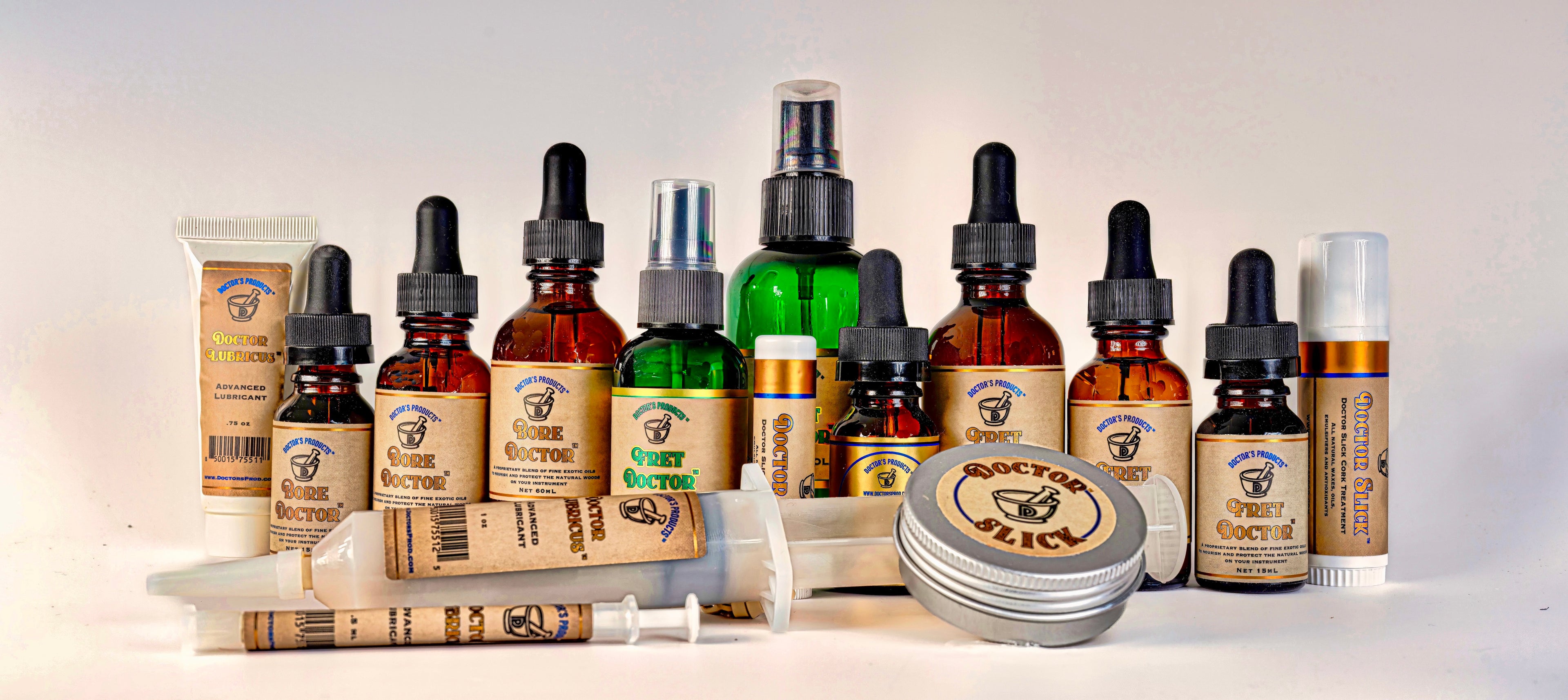
Doctors Products care for your instruments and other wood treasures.
-

Woodwind Products
Maintain your prized woodwind instrument with our exceptional products.
-

Guitar Products
Maintain your prized guitar with our exceptional products.
-

Technician Products
These products will let a technician maintain and restore any products they...


Let us know if you have any more questions!
Frequent Questions and Answers
How Do I Know When I've Oiled Enough?
Each instrument- and each part of an instrument- comes from a different piece of wood, so it has different needs. I have to let the instrument tell me when it's thirsty or full.
For an especially dry piece, I apply a thin, even coat, of oil and let it sit over night. If all oil is absorbed, I repeat the process over the course of several days. I remove any excess oil with a towel. Different parts of an instrument will have different levels of hydration, so only apply to the parts of the instrument that are still parched.
How Do I Tell When It Is Time To Oil?
A regular oiling schedule for an instrument is 3 times a year, but every instrument- and piece of wood- is different.
Environmental conditions, in particular the humidity, affects the oiling, as does the chemistry of the natural oils of the musician. An external piece of unfinished wood will turn ashy and dull when it needs to be oiled. A bore needs to be oiled if it is dull and gray versus black and shiny.
Should I Oil The Outside of My Woodwind Instrument?
If you have no varnish, paint, or lacquer on the outside of the wood, it will dry out over time, so it must be oiled.
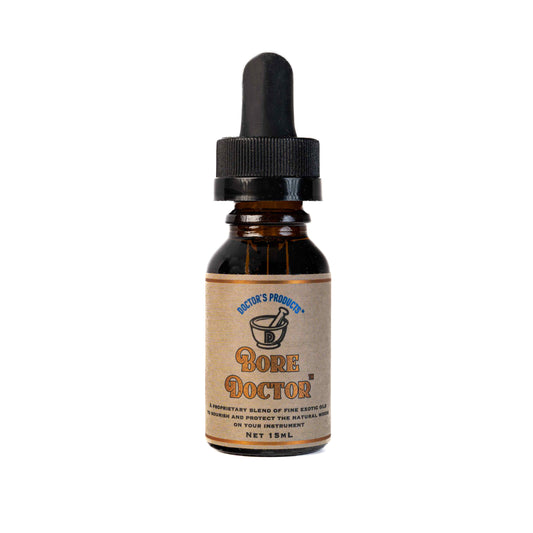
I would suggest cleaning the exterior to remove the gunk formed by dust, dirt, and hand oils which clogs the pores of the wood, hampering natural moisture exchange. Use a very fine abrasive to take off residue- at least 800 grit. I use 0000 steel wool. Rub Bore Doctor into the wood with a towel and let it sit. Reapply coats if the wood drinks all of the Bore Doctor. Buff of the final bits of oil for the highest quality coat, or hand buff with a towel for a lasting, brilliant, protective layer of Bore Doctor.
How Do I Clean My Fret Board?
Consider the dirt a badge of honor. It means you have an instrument that is well loved. But Doctors Products can help to restore your instrument to its glory.
Applying solvents to the gunk is inadvisable. The porous wood will absorb it and potentially affect the cellular matrix and tone of the wood. You will need extremely fine grit material to be kind to your instrument. For the worst jobs, rub with least 800 grit sandpaper, or ideally 0000 steel wool. Tape over your pickups to prevent shavings sticking to the magnets.
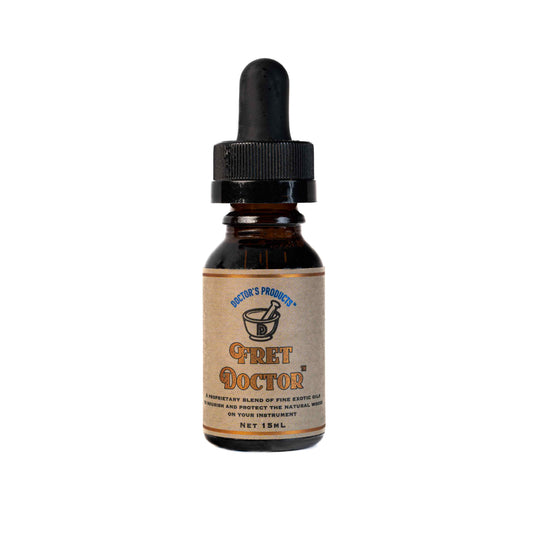
Now, apply your Fret Doctor with a brush or cloth. Keep applying coats until a thin layer of oil beads on the surface. Wipe the excess off with a towel. You'll see a rich, dark, color in your wood when it is completely clean. You'll see, hear, and feel the difference.
-
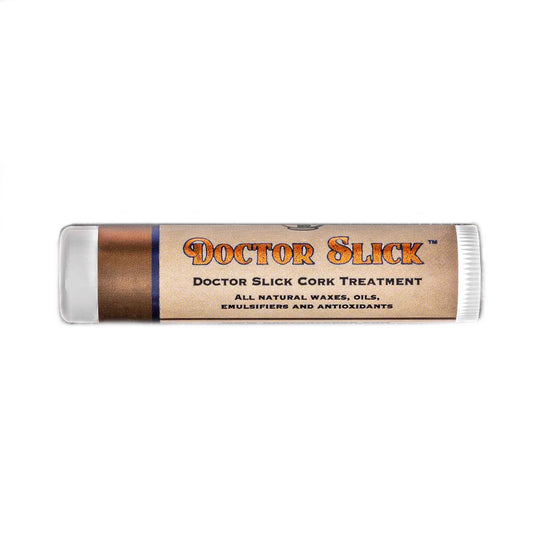
Doctor Slick™ Cork Grease
Vendor:Doctors ProductsRegular price From $4.99 USDRegular priceUnit price per$4.99 USDSale price From $4.99 USD -
Bore Doctor™
Vendor:Doctors ProductsRegular price From $11.99 USDRegular priceUnit price per$11.99 USDSale price From $11.99 USD -
Fret Doctor™
Vendor:Doctors ProductsRegular price From $11.99 USDRegular priceUnit price per$11.99 USDSale price From $11.99 USD -
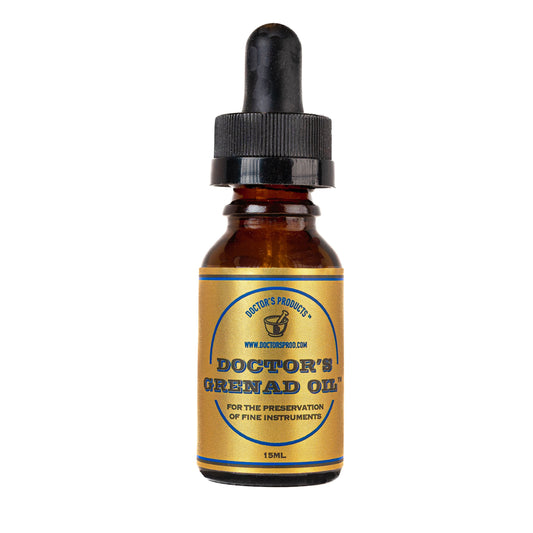
Grenad-Oil™
Vendor:Doctors ProductsRegular price $34.99 USDRegular priceUnit price per$34.99 USDSale price $34.99 USD -
Syntek™ Key Oil
Vendor:Doctors ProductsRegular price $14.99 USDRegular priceUnit price per$14.99 USDSale price $14.99 USD -
Fret Doctor™ Premium Polish
Vendor:Doctors ProductsRegular price From $15.00 USDRegular priceUnit price per$15.00 USDSale price From $15.00 USD -
Doctor Lubricus™ Syringe
Vendor:Doctors ProductsRegular price From $9.99 USDRegular priceUnit price per$9.99 USDSale price From $9.99 USD -
Doctor Slick™ Cork Grease Tub
Vendor:Doctors ProductsRegular price $19.99 USDRegular priceUnit price per -
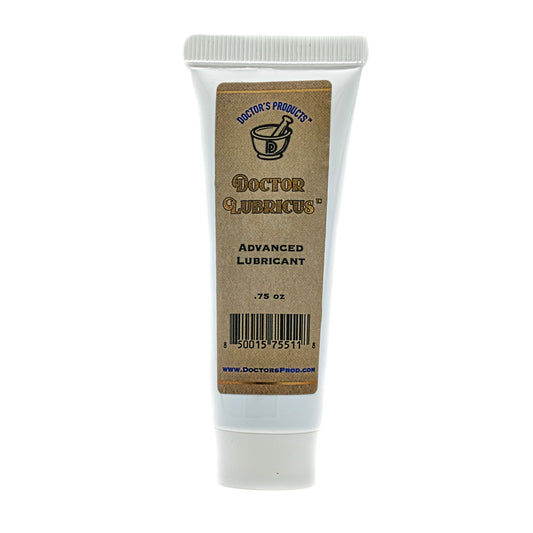
Doctor Lubricus™ Tube
Vendor:Doctors ProductsRegular price $19.99 USDRegular priceUnit price per